Do you wake up with a sore jaw, a dull ache in your temples, or teeth that feel like they’ve been clenched all night? You’re not alone, and at this time of year it’s even more common. Between end-of-year deadlines, Christmas shopping and a full social calendar, many of us carry our stress in our jaw without realising it. At Bloom Auckland in Rosedale, we now offer buccal (intra-oral) massage and fascia release, a hands-on treatment that works on the deep jaw and facial muscles that a regular massage simply can’t reach. This treatment is available only at our Auckland clinic.
What is buccal massage?
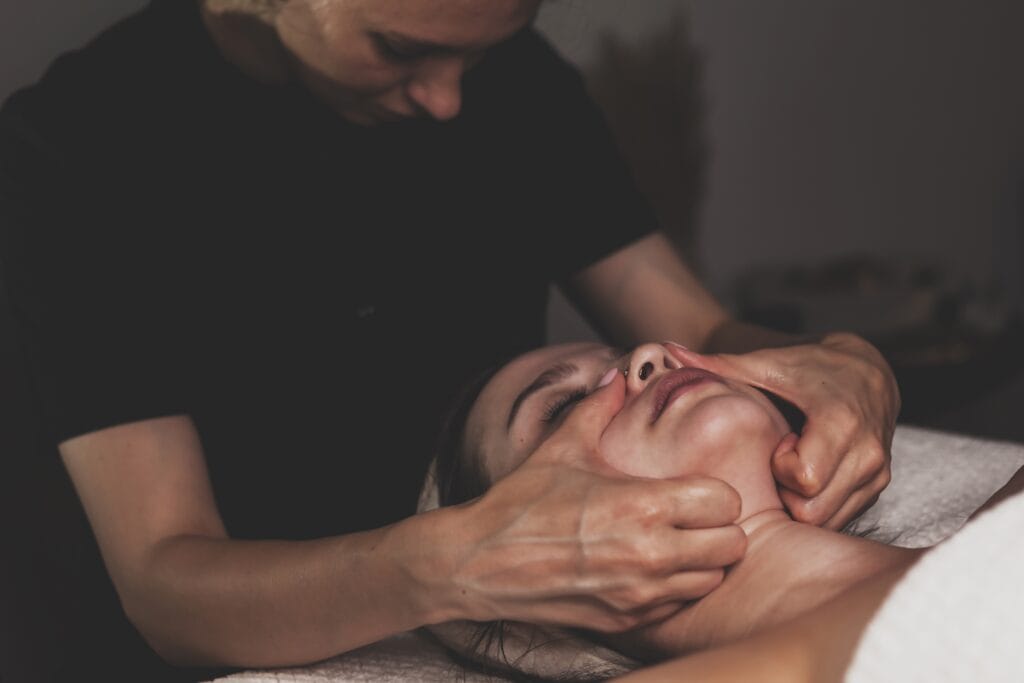
Buccal massage (also called intra-oral massage) is a specialised technique where a trained therapist uses gloved hands to work on the muscles of the jaw and face from inside the mouth, as well as from the outside.
Working from the inside lets your therapist gently reach muscles such as the masseter (your main chewing muscle), the buccinator (in the cheek) and the pterygoids (deep muscles behind the jaw that help it open and move side to side). These muscles are often where clenching and grinding tension builds up, and they’re hard to reach any other way.
We’re not here to rush you through a treatment. Tori, our Auckland therapist, brings years of massage experience and further training in intra-oral and fascia techniques. Tori will talk you through each step, check in with you throughout, and you’re always in control of the pressure.
What is fascia release?
Fascia is the thin layer of connective tissue that wraps around your muscles. When it becomes tight or restricted, through stress, posture, repetitive habits like clenching, or after injury, it can feel stiff and sore.
Fascia release (also known as myofascial release) uses slow, sustained pressure and gentle stretching to loosen this tissue. Unlike a relaxation massage that uses lots of oil and flowing strokes, fascia release is done dry or with very little product, so your therapist can gently “hook” into tight tissue and hold until it softens. At Bloom, we combine it with buccal massage to work on the jaw, face, neck and shoulders together, because tension rarely stays in just one place.
Why people choose buccal massage and fascia release
Most of our clients don’t come to us for beauty reasons. They come because something feels tight, sore or restricted. People commonly book this treatment for:
- TMJ tension and jaw pain: tightness around the temporomandibular joint (TMJ), the hinge in front of your ear that connects your jaw to your skull.
- Clenching and teeth grinding (bruxism): especially if you wake with a tired or aching jaw.
- Temple pain and tension headaches: the temporalis muscle at the side of your head works hard when you clench.
- Limited jaw opening: finding it harder to open your mouth wide, yawn, or take a big bite.
- Speech feeling affected: some people notice their jaw or face feels stiff or tired when they talk for long periods.
- Neck and shoulder tension: tight jaw muscles often go hand in hand with a tight neck.
Many clients tell us their jaw feels softer, looser and easier to move after a session. Everyone is different, and results vary from person to person. For ongoing issues, a series of sessions is often recommended alongside good habits at home.
While our focus is on comfort and movement, releasing tight jaw and cheek muscles can also leave the lower face looking more relaxed, with a temporary reduction in puffiness. Some clients enjoy this as a side benefit. It isn’t a substitute for injectables or surgery, and any change in appearance is temporary. If reducing puffiness is your main goal, you may also like our lymphatic massage, or detox massage. Learn more.
Why jaw tension spikes before Christmas
Stress shows up in the body in different ways, and the jaw is one of the most common places it settles. In the busy weeks leading up to Christmas, many people notice they’re clenching more during the day, grinding at night, or getting more tension headaches. Booking a buccal and fascia release session before the holidays is a simple way to give your jaw, face and neck some focused care, so you can enjoy the season feeling a little lighter.
What to expect at your appointment
- A chat first: we’ll ask about your jaw, any pain or clicking, dental work, and your health history.
- External work: your therapist starts on the neck, shoulders, jaw and face from the outside to warm up the area.
- Intra-oral work: wearing medical-grade gloves, your therapist gently works on the muscles inside the cheeks and along the jaw. You can pause at any time.
- Aftercare advice: simple tips to help you notice and reduce clenching day to day.
The treatment can feel unusual at first, but most people find it surprisingly relaxing. Some tenderness afterwards is normal and usually settles within a day.
If you have significant jaw pain, a jaw that locks, or symptoms that are getting worse, we recommend seeing your dentist or GP as well. Buccal massage is a supportive therapy and isn’t a replacement for medical or dental care.
Buccal massage in Auckland: book at Bloom Auckland
Buccal massage and fascia release are offered exclusively at Bloom Auckland, Level 2, 5 Home Place, Rosedale (above Tend Medical Centre), with onsite parking. Call or text us on 027 295 6719 Whether you’re on the North Shore or travelling from across Auckland, we’d love to help you feel more comfortable in your jaw before the year wraps up.
Book your buccal massage at Bloom Auckland or find out more about Bloom Auckland
Want to explore our other hands-on treatments? Read about Bloom’s signature massage experiences.
Buccal massage and fascia release are available only at Bloom Auckland, Level 2, 5 Home Place, Rosedale, on the North Shore. We don’t offer this treatment at our Wellington clinic.
Can buccal massage help with TMJ?
Many people with TMJ tension find that releasing the jaw muscles helps their jaw feel looser and more comfortable. Results vary between individuals and are usually temporary, so regular sessions may be suggested. If you have a TMJ diagnosis or severe symptoms, please also check in with your dentist or GP.
Is buccal massage good for clenching and teeth grinding?
Clenching and grinding can leave the masseter and temporalis muscles tight and tired. Buccal massage works directly on these muscles, and many clients say their jaw feels more relaxed afterwards. It works best alongside other support, such as a night guard if your dentist has recommended one.
Does buccal massage hurt?
It can feel unusual and a little tender in tight spots, but it shouldn’t be painful. Your therapist checks in throughout and you can pause at any time.
Is it hygienic?
Yes. Your therapist wears medical-grade gloves for all intra-oral work.
How is fascia release different from a normal massage?
Fascia release uses slow, sustained pressure and gentle stretches, with little or no oil, to loosen tight connective tissue. A relaxation massage uses flowing strokes and oil. Fascia release is more targeted and slower.
Will it change the shape of my face?
Some people notice their lower face looks more relaxed or less puffy after a session. This effect is temporary and isn’t a substitute for injectables or surgery. Our focus with this treatment is comfort and movement.
How many sessions will I need?
It depends on you. Some people book a one-off session for relief, while others with ongoing clenching come in regularly. We’ll talk about what suits you at your first appointment.
Who shouldn’t have buccal massage?
Let us know before booking if you’ve had recent dental work, oral surgery, facial injectables, have mouth ulcers or an infection, or a latex (or nitrate) allergy (we do not use latex gloves). We may suggest waiting or adjusting the treatment.